
If you want to know about the history of soccer in, this guide covers everything you need. This guide is maintained by a Kansas City local. Some links may be affiliate links. We only recommend things we’d tell a friend about.
Kansas City is not a new soccer city. It is one of the original soccer cities in America. Before most US metro areas had professional teams, KC was building a soccer culture that now spans three decades, multiple championships, and two professional franchises. The World Cup is not arriving in a sports vacuum. It is landing in a city that has been waiting for this moment.
The Kansas City Wiz / Wizards Era (1996-2010): The History Of Soccer In
Kansas City‘s professional soccer history begins with the founding of Major League Soccer in 1996. The Kansas City Wiz (yes, that was the original name) were one of the 10 charter MLS franchises. The name lasted one season before being changed to the Kansas City Wizards in 1997.
Those early years were rough. The Wizards played at Arrowhead Stadium, the same venue that will host the 2026 World Cup. A 76,000-seat football stadium was comically large for MLS crowds that often numbered 10,000-15,000. The team played on artificial turf. The atmosphere was thin. But the fans who showed up were dedicated.
The Wizards won MLS Cup in 2000, beating the Chicago Fire 1-0 in front of a modest crowd at RFK Stadium in Washington, D.C. That championship validated KC as a soccer city, even if the national media barely noticed. Mastering the history of soccer in takes practice but delivers great results.
The US Open Cup Dynasty
Where the Wizards/Sporting KC truly made their mark was in the Lamar Hunt US Open Cup, the oldest ongoing soccer competition in the United States (named after Kansas City’s own Lamar Hunt, who was instrumental in bringing professional soccer to America). Kansas City has won the US Open Cup four times (2004, 2012, 2015, 2017), more than any other MLS team during that era.
Lamar Hunt’s connection to KC soccer cannot be overstated. Hunt, who also founded the American Football League and was a key figure in creating the Super Bowl, was a passionate soccer advocate. He brought the Wizards to KC, and the US Open Cup trophy bears his name. His legacy is woven into the fabric of Kansas City sports.
Sporting Kansas City and Children’s Mercy Park (2011-Present)
Everything changed in 2011. The team rebranded as Sporting Kansas City, and more importantly, moved into their own soccer-specific stadium: Sporting Park (now Children’s Mercy Park) in Kansas City, Kansas. The 18,467-seat stadium was purpose-built for soccer and transformed the matchday experience.
Children’s Mercy Park is widely considered one of the best soccer-specific stadiums in North America. The steep stands create an intimate, loud atmosphere. The Cauldron, the supporters’ section behind one goal, generates constant noise with drums, chants, flags, and smoke. On big nights, the atmosphere rivals anything in European football. Understanding the history of soccer in is key to a great World Cup experience.
Sporting KC won MLS Cup again in 2013, beating Real Salt Lake in a penalty shootout at Sporting Park. That match, played on a freezing December night in front of a sellout crowd, is one of the greatest MLS Cup finals ever played. The atmosphere was electric, the drama was incredible, and it cemented Sporting KC as one of MLS’s flagship franchises.
The KC Current: Women’s Soccer Powerhouse
In 2020, Kansas City gained a women’s professional soccer team: the KC Current, competing in the National Women’s Soccer League (NWSL). The Current have quickly become a significant force in women’s soccer, with a devoted fanbase and strong ownership.
The KC Current made history by building the first stadium purpose-built for a women’s professional sports team in the world: CPKC Stadium, a 11,500-seat venue that opened in 2024 on the Kansas City riverfront. The stadium is a statement of investment and belief in women’s sports, and it has become a source of immense pride for the city.
Having both Sporting KC and the KC Current gives Kansas City one of the strongest professional soccer cultures in the United States. When the World Cup arrives, it will land in a city that already lives and breathes the sport. When it comes to the history of soccer in, preparation matters most.
KC Soccer Culture
Beyond the professional teams, Kansas City’s soccer culture runs deep into the community:
- Youth soccer: The metro area has dozens of competitive youth soccer clubs. Heartland Soccer Association, based in Overland Park, KS, hosts some of the largest youth tournaments in the country.
- The Cauldron: Sporting KC’s supporters’ group is one of the most organized in MLS. They coordinate tifo displays (large choreographed banners), lead chants for 90 minutes, and create an atmosphere that has earned national recognition.
- Soccer bars: No Other Pub in the Power and Light District is KC’s dedicated soccer bar, showing every major league and international match. It will be ground zero for World Cup watch parties.
- International communities: KC’s diverse population brings authentic soccer passion. Argentine, Mexican, Salvadoran, Somali, Congolese, and European communities all bring their football culture to the city.
- Lamar Hunt legacy: The Hunt family remains deeply involved in KC soccer. The US Open Cup trophy, MLS’s growth, and KC’s soccer infrastructure all trace back to Lamar Hunt’s vision.
Key Moments in KC Soccer History
| Year | Event |
|---|---|
| 1996 | Kansas City Wiz founded as MLS charter member |
| 1997 | Renamed Kansas City Wizards |
| 2000 | Won MLS Cup (beat Chicago Fire 1-0) |
| 2004 | Won Lamar Hunt US Open Cup |
| 2011 | Rebranded as Sporting Kansas City; moved to Sporting Park |
| 2012 | Won US Open Cup |
| 2013 | Won MLS Cup (beat Real Salt Lake on penalties) |
| 2015 | Won US Open Cup |
| 2017 | Won US Open Cup (4th title, most in MLS) |
| 2020 | KC Current (NWSL) founded |
| 2024 | CPKC Stadium opens (first women’s sport-specific stadium in the world) |
| 2026 | FIFA World Cup comes to Arrowhead Stadium |
From Arrowhead to the World Cup
There is a poetic symmetry to the World Cup returning to Arrowhead Stadium. The Kansas City Wizards played their early MLS matches there in the late 1990s, trying to build soccer culture in a football stadium. Now, 30 years later, that same stadium will host the biggest soccer tournament on the planet.
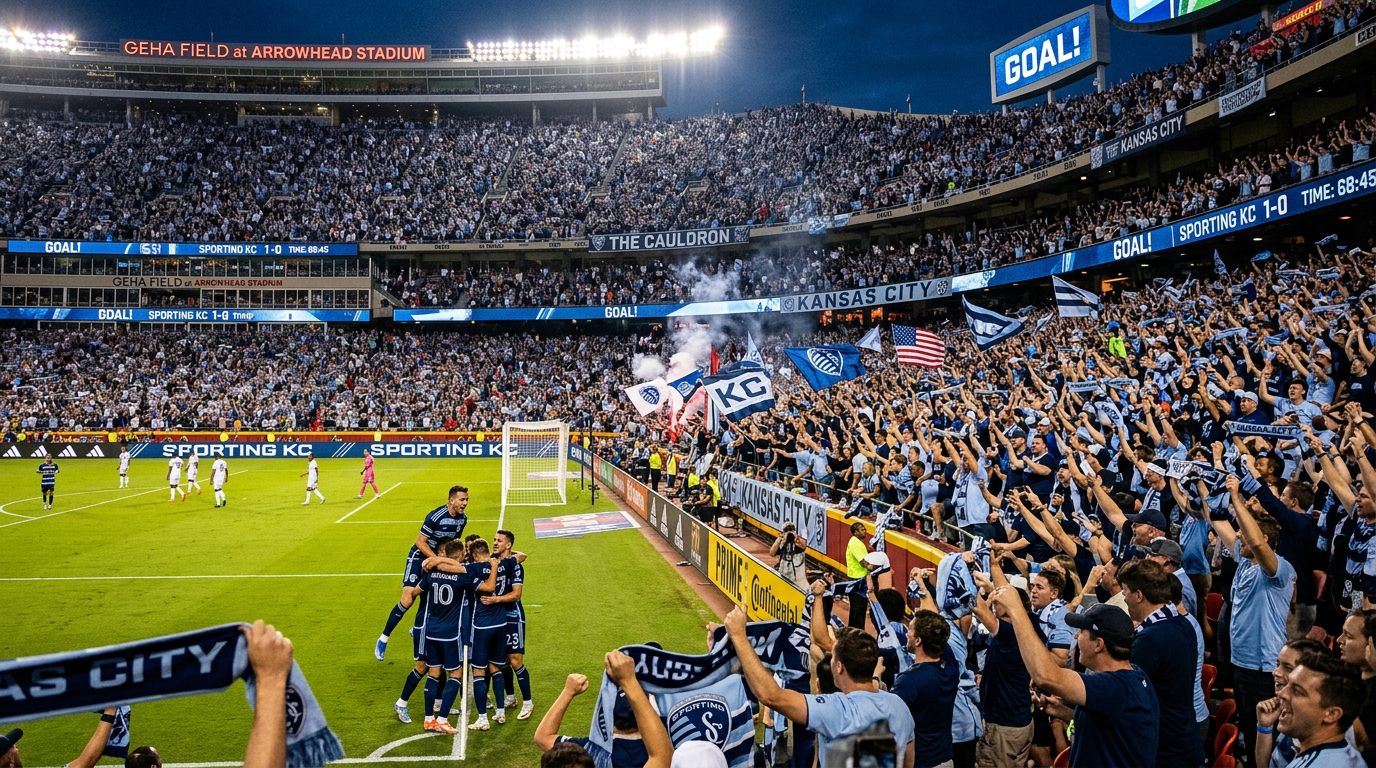
Kansas City earned this. The fans who showed up to Arrowhead for those early Wizards matches with 10,000 people in a 76,000-seat stadium laid the foundation. The supporters who packed Children’s Mercy Park and created one of the best atmospheres in MLS proved that KC is a soccer city. The KC Current showed the world that Kansas City invests in the sport at every level.
When the World Cup kicks off at Arrowhead in June 2026, it will not be a city discovering soccer for the first time. It will be a city that has loved this sport for decades finally getting its moment on the world stage.
Further reading: For more information, see FIFA World Cup 2026.
Frequently Asked Questions
Where will the 2026 World Cup matches be played in Kansas City?
The 2026 World Cup matches in Kansas City will be hosted at Arrowhead Stadium, the same venue where the Kansas City Wizards played during their early MLS years. This 76,000-seat stadium has a rich soccer history dating back to the franchise’s founding in 1996.
Why is Kansas City considered one of the original soccer cities in America?
Kansas City earned this distinction by establishing professional soccer culture before most U.S. metro areas had professional teams. The city has supported soccer for over three decades through multiple championships and franchises, including being home to one of the 10 charter MLS franchises when the league began in 1996.
What major soccer achievements has Kansas City accomplished in its history?
Kansas City’s soccer legacy includes winning the MLS Cup in 2000 and dominating the US Open Cup with four championships (2004, 2012, 2015, 2017), more than any other MLS team during that era. These accomplishments validate Kansas City as a serious soccer city with deep roots in American professional soccer.
How has Kansas City’s soccer fan base grown since the Wizards era?
Kansas City’s dedicated soccer fans have grown significantly since the early Wizards days when crowds were modest at 10,000-15,000 in the large Arrowhead Stadium. The city’s passionate fan base and multi-decade soccer culture now position it to welcome the World Cup as a thriving soccer destination rather than a sports vacuum.